Traffic builds near start time
A planned departure window accounts for concentrated vehicle volume around gates and venue access roads.

Empire Limos coordinates concert, sporting event, convention and hosted-event transportation around passenger count, venue access, scheduled arrival, waiting needs and the return trip. The plan is built before event traffic changes normal road and curb conditions.
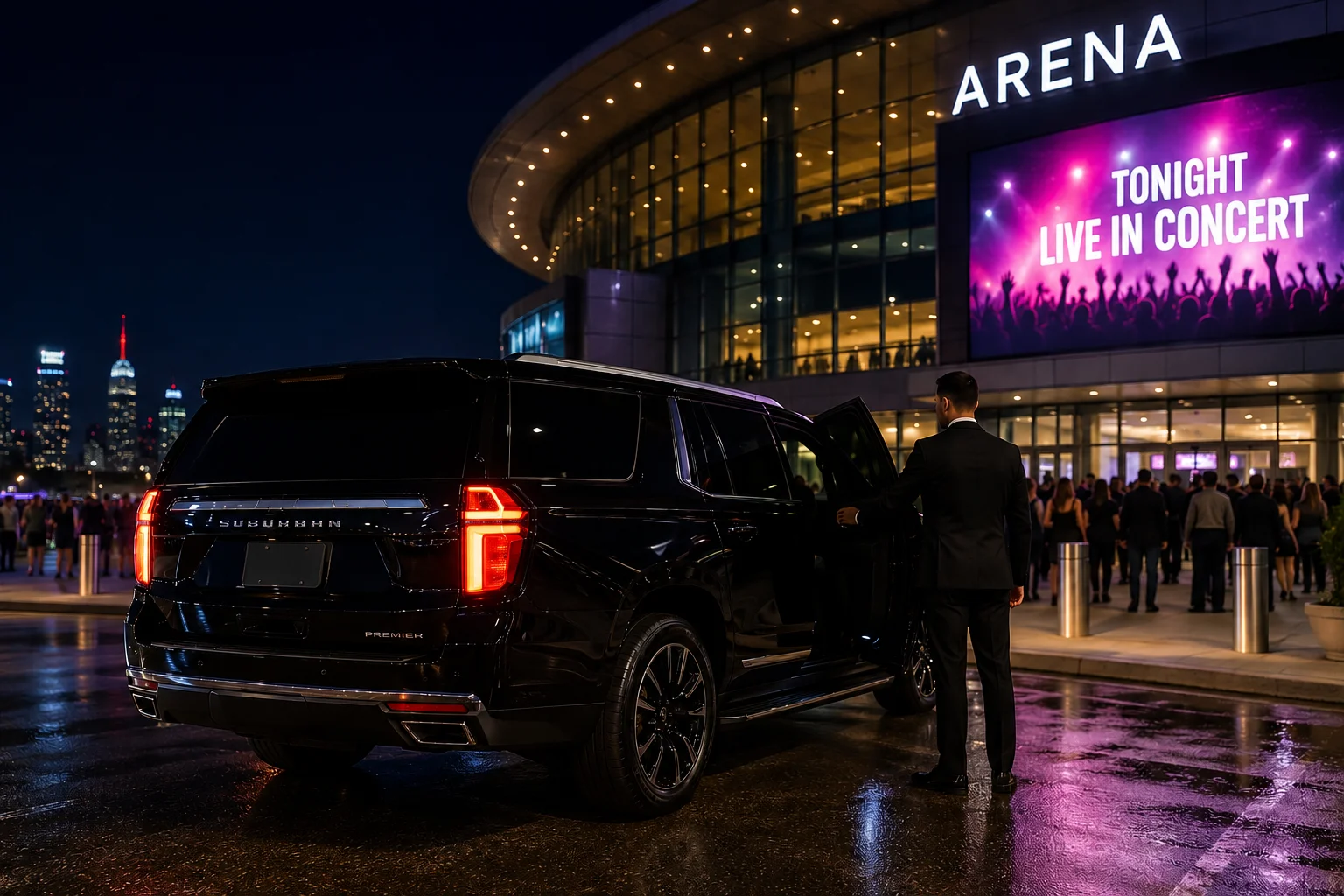
A venue can concentrate thousands of arrivals into a narrow period. Parking entrances, security checkpoints, pedestrian crossings, temporary road controls and rideshare zones can slow the final part of the route.
The return trip may be harder. Large groups often exit together, curb space tightens and the arrival point may no longer be usable. Empire Limos plans the ride around the event schedule, passenger group, vehicle size, access conditions and expected return needs.
A planned departure window accounts for concentrated vehicle volume around gates and venue access roads.
Police direction, security operations and pedestrian zones can affect how close a vehicle can approach.
A practical meeting strategy is more useful than assuming the arrival point will remain available after the event.
Clear group size, pickup locations and departure expectations support the right vehicle assignment.
Start time is only one variable. Guest count, venue access, duration, multiple stops and the expected exit pattern can change the right service structure.
Travel for arenas, stadiums, theaters, clubs and amphitheaters with attention to arrival pressure and post-show pickup conditions.
Movement planned around kickoff, first pitch, tipoff, parking traffic, pedestrian flow and concentrated departures.
Transportation for executives, speakers, clients and teams between airports, hotels, offices, dinners and venues.
Airport, hotel, exhibition center and hosted-dinner movement built around a multi-part business itinerary.
Vehicle planning for longer event days where access, timing and return arrangements may differ from a normal point-to-point ride.
Scheduled transportation for invited guests, sponsors, stakeholders and groups with defined arrival windows.
The venue address identifies the property. It does not always identify the best meeting location after a concert, game or convention.
Consider the expected arrival period, surrounding roads and the practical approach to the event area.
Temporary closures, security perimeters and venue procedures may change where a vehicle can safely stop.
Passenger and chauffeur contact matters when crowds or changing road conditions affect the original plan.
The return plan should account for concentrated departures rather than normal curb conditions.
The practical pickup location may need to reflect active traffic controls and venue access at the time.
Each stage adds the information needed for vehicle selection, dispatch, passenger communication and pickup planning.
Provide the event, date, passenger count, pickup address, schedule, destination and expected return needs.
Determine whether point-to-point, hourly, multi-stop or coordinated group transportation fits the itinerary.
Select capacity around the passenger group, luggage when relevant and the way the group needs to move.
Reservation details support scheduling and vehicle assignment before the planned pickup.
The chauffeur follows the scheduled trip while active traffic and access conditions shape the final approach.
For round trips or hourly bookings, the return plan reflects passenger readiness and post-event conditions.
The right format depends on how fixed the schedule is, whether the vehicle is needed between stops and how much flexibility the event day requires.
Useful when passengers have a defined pickup and destination and do not need continuous vehicle availability.
Better suited to dinners, hospitality schedules, multiple stops or timing that may shift during the event.
Capacity should reflect the actual group, pickup pattern and event schedule. Review available options on the Empire Limos fleet page .
For individual travelers, couples and compact executive movement.
For small groups needing added passenger and luggage flexibility.
For coordinated group travel in one vehicle rather than separate cars.
For hosted groups, teams and larger scheduled passenger movement.
For substantial groups where coordinated movement is the main requirement.
A couple attending a concert has a different plan from an executive assistant coordinating guests or an organizer moving a large group.
Direct venue travel with an optional prearranged return.
Group movement designed to keep the party together.
Scheduled movement for executives, speakers and invited guests.
Airport, hotel, office, dinner and event transportation within one itinerary.
Passenger movement aligned with arrival windows and vehicle assignments.
Connected airport, hotel, venue and return transportation.
Exact arrangements depend on the event, schedule, location, passenger count, vehicle type and availability.
Book once the event date and core itinerary are known. High-demand concerts, championship games, festivals and conventions can increase vehicle demand. Early planning also gives time to confirm passenger count, pickup structure and return needs.
Yes, subject to availability and reservation details. The outbound pickup and return structure should be defined in advance because post-event access may differ from pre-event conditions.
The answer depends on the service format and reservation terms. Discuss uncertain timing before booking so the transportation structure reflects the likely need.
Not always. Venue rules, road closures, police direction, security perimeters and pedestrian flow may require a different practical meeting location.
Hourly service can fit evenings with dinner, multiple stops, hospitality plans or flexible timing. Point-to-point service may be better for a simple defined trip.
Start with the passenger count, then consider luggage, pickup locations, itinerary and whether everyone should travel together. Sedans, SUVs, Sprinters, mini coaches and coach buses serve different group sizes.
Yes. A trip may include an airport arrival, hotel transfer, dinner, event transportation and return movement. Share flight timing, luggage needs and scheduled commitments when requesting a quote.
Provide the date, pickup address, venue, preferred pickup time, passenger count, one-way or round-trip requirement, expected return timing, additional stops and luggage information when applicable.
Share the event date, passenger count, pickup location, venue, schedule and return needs. Empire Limos can review the request and help structure the reservation around the actual trip.