Mini Coach Rentals
Once your group outgrows an SUV, a mini coach keeps everyone in one vehicle instead of two. We size it to your headcount and how much luggage is coming along.
See the Fleet →
Nobody wants to coordinate three separate cars for one wedding party, or explain to a client why half the team showed up ten minutes apart. Group transportation solves that: Empire Limos puts your whole party in one mini coach or sedan, with a licensed chauffeur running the entire route, so everybody lands at the same place at the same time.
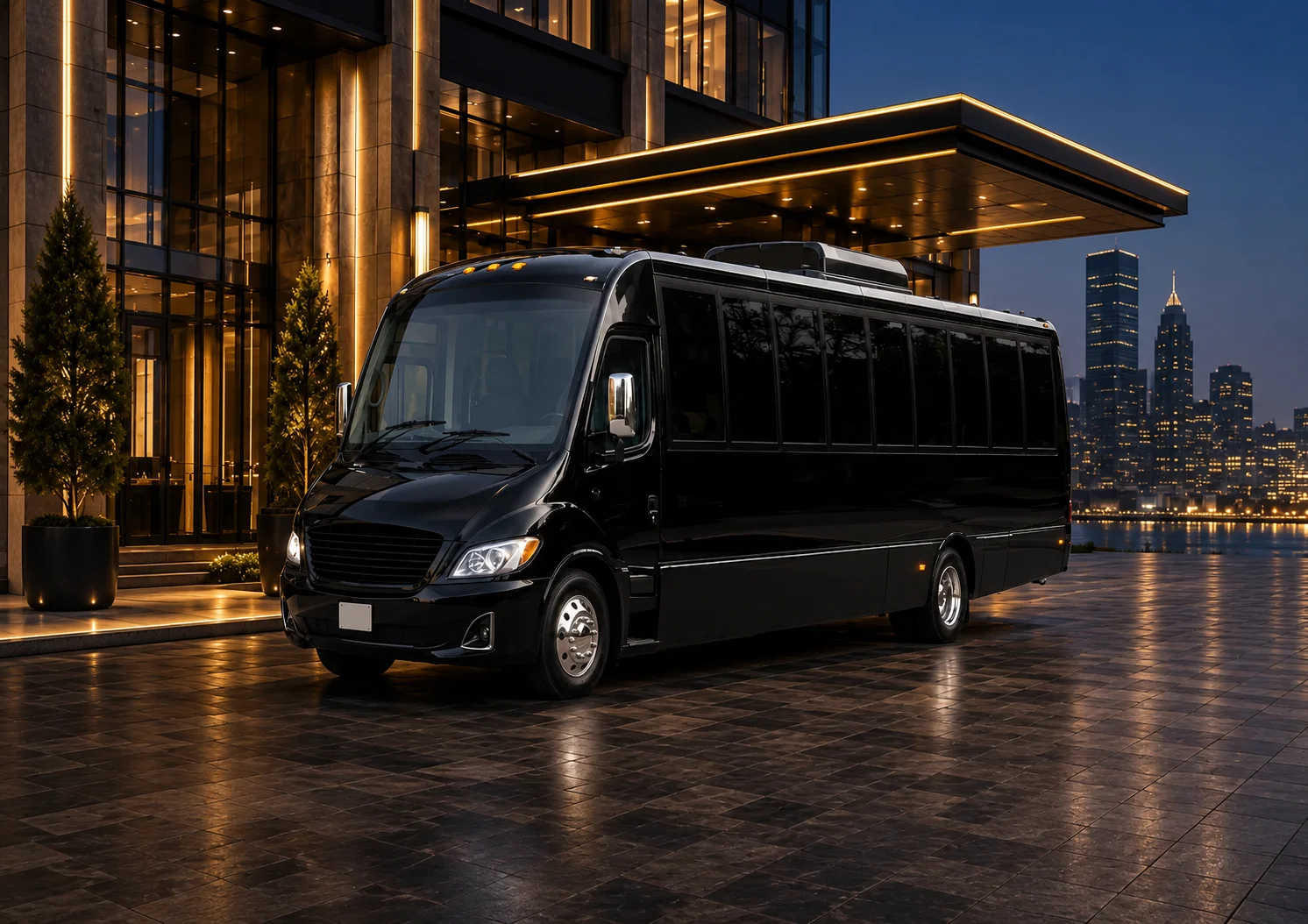
When a dozen people each drive themselves to the same place, this is usually what happens: someone's flight lands late, someone else can't find parking, and the event starts before half the guests have arrived. We've seen it happen at weddings, corporate meetings, and airport pickups more times than we can count.
Group transportation fixes that by putting everyone in one vehicle with one driver and one route, from the first pickup to the last drop-off. Whether it's a corporate team of six or a wedding party of thirty with luggage, we match the vehicle size to your group, from a sedan up to a full-size coach. Every driver holds the license required for that vehicle, and every vehicle carries commercial insurance built for passenger transport, not a personal auto policy.
These are the bookings that come in most: airport runs, office trips, weddings, concerts, and the occasional family reunion nobody expected to need a mini coach for.
Once your group outgrows an SUV, a mini coach keeps everyone in one vehicle instead of two. We size it to your headcount and how much luggage is coming along.
See the Fleet →We watch your flight number, not the clock, so a delayed landing doesn't mean a missed pickup. Your driver meets the group at baggage claim and takes it from there.
Airport Transportation →Get your team, your clients, or a visiting executive between the office and a hotel or conference on a set schedule, so the meeting starts with everyone already in the room.
Corporate Service →Hotel to ceremony, ceremony to photos, photos to the reception. We build the route around your actual timeline, not a generic block of hours.
Wedding Transportation →We time pickup so your group is walking in when doors open, not still looking for parking after the show has started.
Event Services →Family reunions, milestone birthdays, tours you've been planning for months — we build the route around your stops, in the order you actually want them.
See All Services →Five separate cars means five drivers checking five different phones for directions, and five chances for someone to take a wrong turn. With group transportation, one chauffeur drives the whole trip and already knows the stop order and the schedule before anyone gets in the vehicle. We also build in extra time on purpose, because a schedule with zero buffer falls apart the moment one traffic light runs long.
Give us these five things and we'll come back with a vehicle match and a schedule before you have to commit to anything.
Fourteen passengers don't always call for the same vehicle. A quick meeting transfer with a few laptop bags needs less room than an airport arrival full of checked luggage, or a production crew hauling equipment cases.
| Vehicle Category | Published Fleet Seating | Useful For | Planning Check |
|---|---|---|---|
| Luxury SUV | Up to 6-7 seats | Small executive groups or coordinated multiple-SUV movements | Passenger and luggage limits may require more than one vehicle |
| Mercedes Sprinter Van | 12-14 seats | Executive teams, airport groups, family travel and compact event transfers | Confirm bag count before using every available passenger seat |
| Mini Coach Bus | 14-27 passengers | Conference teams, wedding guests, tours, shuttle loops and larger airport groups | Access, storage and amenities vary by assigned vehicle |
| Coach Bus | 35-56 seats | Large groups, high-volume events and programs requiring fewer total vehicles | Confirm loading zones, road access and venue staging requirements |
Important: published seat counts describe the vehicle category, not a guarantee that every seat works with every luggage load. Vehicle make, configuration, storage, and amenities can vary by the specific vehicle assigned to your trip.
Hotel, ceremony, reception, all on one route so nobody's missing when the toasts start.
Teams and clients moved to the meeting, offsite, or dinner on your actual schedule.
Timed to kickoff or doors, so you're in your seats, not stuck in the parking garage.
Matched to your flight, gate to curb, whether it's one arrival or five landing close together.
Pickup spots, destination, stops, date, and how many people — that's all we need to start pricing your trip.
A mini coach or sedan gets picked based on your headcount and luggage, then we send over pricing.
Check the pickup times and stops, sign off, and your chauffeur has the exact plan before travel day.
Meet your driver at the pickup point and let the route we planned take it from there.
Your group has a flight to catch or a ceremony that starts at a specific minute, and that shapes everything we do from the first phone call to the final drop-off. Read more about our drivers and fleet on the About Us page.
Every chauffeur carries a valid commercial license and drives your exact route, so your schedule holds up.
One stop or seven, we build the route around what your group actually needs, not a fixed template.
A single dispatcher runs your group's details start to finish, so nobody's booking separate rides.
A group riding together is only as safe as the driver's license and the vehicle's condition. We check both before anyone boards, and if you ask to see the paperwork, we'll show it to you.
Every chauffeur holds the commercial license required to operate group transportation vehicles in our service area.
Every mini coach and sedan we run carries commercial auto insurance for the length of your trip.
Tires, brakes, and seating get inspected before your group boards, every single trip, not on a rotation.
Dispatch tracks pickup, route, and drop-off while your trip is happening, so your schedule stays on track.
We run group transportation to regional airports, downtown hotels, convention halls, and wedding venues across our service area. Before your travel date, we check for anything nearby that could affect your route, like a marathon closing streets or a festival rerouting traffic. If there's unexpected construction or a road closure on the day itself, your driver switches to the next best route instead of stopping to figure it out.
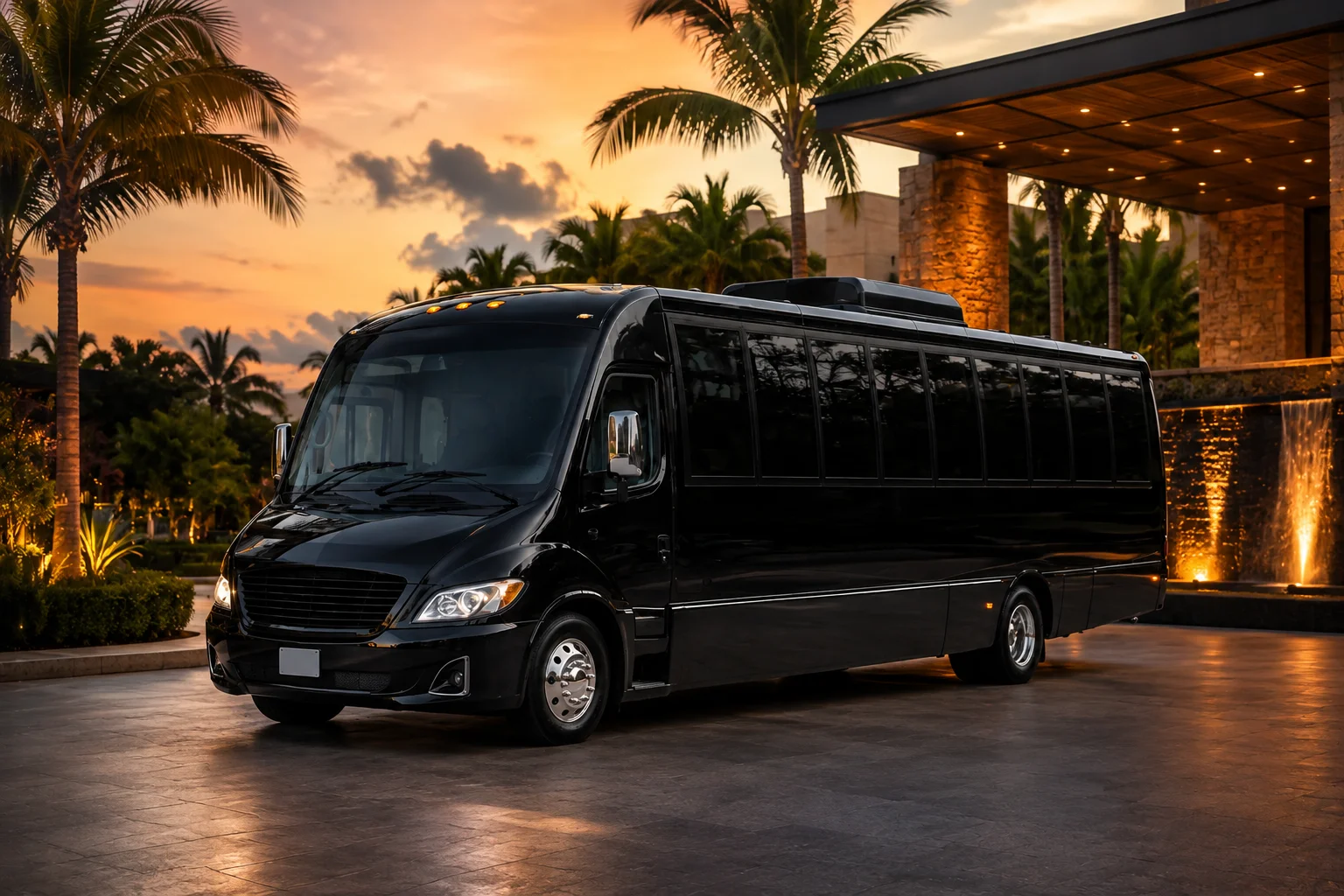
Send over your date, pickup addresses, and headcount, and we'll come back with a licensed, insured vehicle match before you have to book anything.